How melanoma patients are treated today 🗞️ Patients typically have had a melanoma cut out, often along with the lymph nodes it had reached, and their scans are now clear of cancer.
Following this, the standard of care from here is a year of immunotherapy: a pembrolizumab infusion every three weeks (or six), given in case any cells were left behind.
However, this isn’t without side effects. In Keynote-054 , the trial that made it standard across medical practice, 14% of patients stopped early because of side effects. Of these, thyroid damage was among the most common side effects. It also doesn’t totally reduce the risk: seven years out, only 50% of patients on pembrolizumab were alive without a relapse, against 36% on placebo.
Even among survivors of early, localised melanoma, where the odds are good, a JAMA Dermatology study found 75% reported clinically significant fear of recurrence.
How the Moderna trial performed and how it could change the standard of care First, a science primer!
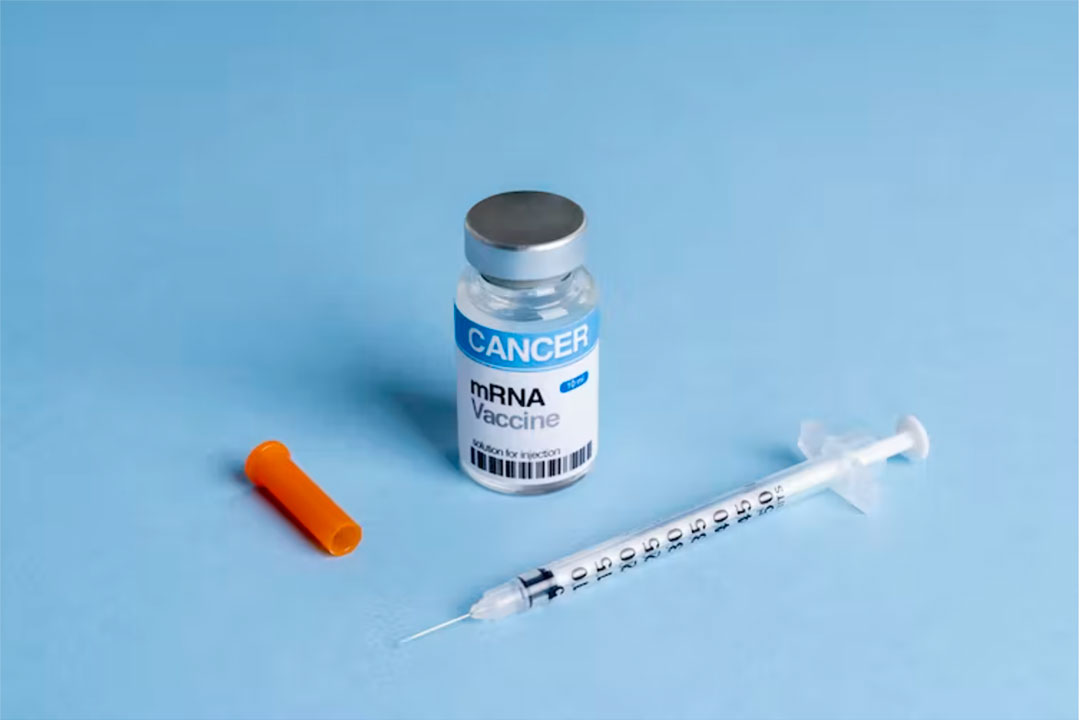
mRNA is the set of instructions a cell reads to build a protein. Moderna’s vaccine is a strand of synthetic mRNA, wrapped in a tiny fat bubble so it can get into cells, telling them to make fragments of proteins that exist only in the patient’s tumour. The immune system learns to recognise those fragments and hunts down any cancer cells carrying them. After surgery, each patient’s tumour is sequenced and a vaccine is made for them alone, with up to 34 targets. The manufacturing process is identical whatever the instructions, so the same plant can make a different medicine for every patient.
On 19 August , Merck and Moderna said INTerpath-001 had met its primary endpoint. In other words, a cancer vaccine built individually for each patient has now cleared a properly powered Phase 3. As the release states:
“Intismeran autogene is an mRNA-based individualized neoantigen therapy (INT) designed specifically for each patient based on the unique set of mutations within their tumor to train and activate the immune system to recognize and fight cancer”
Moderna
For context, there were over 1k patients enrolled in the study, with 2 in 1 receiving treatment for up to 56 weeks. We have tried to simplify the design below:
The novel treatment was tested against pembrolizumab . Pembrolizumab is already the standard of care after melanoma surgery and already lowers the risk of relapse, so the vaccine had to improve on a treatment that works.
In order to understand the impact, we should think through two clinical trial terms:
A hazard ratio compares how often something bad (here, the cancer returning, or death) happens in one group against another over time: 1.0 means no difference, and anything below 1.0 means fewer events in the treated group.
Distant metastasis-free survival measures how long patients go before the cancer spreads to distant organs such as the lungs, liver or brain, which is the point at which melanoma becomes most dangerous. On that measure, the Phase 2b hazard ratio was 0.411 , a 59% reduction.
So, how big is the gain? The Phase 3 announcement gave no numbers, so the best guide is the earlier Phase 2b, KEYNOTE-942 . It randomised 157 patients on the same 2:1 design and, at five years, reported a recurrence-free survival hazard ratio of 0.510 . In plain terms, patients on the combination relapsed or died at about half the rate of those on pembrolizumab alone. For comparison, pembrolizumab against placebo has a hazard ratio of 0.63 at seven years in KEYNOTE-054 . So in the Phase 2b, the vaccine’s added benefit was larger than pembrolizumab’s own, and it came on top of it. The caveat is size: with 157 patients, the confidence interval runs from 0.294 to 0.887, so the true effect could be much smaller!
A different cancer trial, published nine days later, with a different outcome! On 28 August , BioNTech and Genentech terminated BNT122-01, their Phase 2 of autogene cevumeran in resected colorectal cancer. The independent monitoring board found a numerical imbalance in overall survival between the arms and concluded that carrying on would not change the result.
So this was a similar technology but with a very different result!
Moderna / Merck : INTerpath-001 BioNTech / Genentech : BNT122-01 Vaccine Intismeran autogene Autogene cevumeran Tumour Melanoma Colorectal cancer Phase 3 2 Patients 1,137 , stage IIB-IV, fully resected Stage II (high risk) or III, resected, ctDNA-positive (size not disclosed) How the vaccine was given With pembrolizumab On its own (monotherapy) Compared against Pembrolizumab alone Watchful waiting Result Recurrence-free and distant metastasis-free survival both met, 19 Aug 2026 Stopped for futility, 28 Aug 2026 Survival Still maturing Numerical imbalance in overall survival, favouring the control arm Mutations for the vaccine to target High (UV damage) Low
Melanoma is caused by ultraviolet damage, which means its cells carry an unusually large number of mutations. More mutations means more abnormal proteins that exist nowhere else in the body, which means more for a vaccine to aim at. Melanoma also responds to checkpoint inhibitors better than almost any other solid tumour, so the immune response the vaccine is amplifying was already partly working.
Colorectal cancer in the adjuvant setting offers less of both. The trial enrolled patients whose scans were clean and whose only sign of disease was tumour DNA circulating in the blood.
Why it matters! Three reasons. First, cancer vaccines have been about to work since the 1980s. Canvaxin , a melanoma vaccine developed in 1984 , was stopped in Phase 3 in 2005 . GSK ‘s MAGE-A3 vaccine failed in the same post-surgery melanoma setting in 2013 . INTerpath-001 is the first time a cancer vaccine has beaten an existing drug in a large randomised trial.
Secondly, production was always the obstacle: a bespoke drug for every patient, made to pharmaceutical standards, quickly enough to matter after surgery. mRNA uses the same manufacturing process whatever instructions it carries, so every patient in the vaccine arm could get their own version, across a trial of more than a thousand people.
Finally, It revives the case for mRNA as a platform. The technology has had four bad years:
COVID revenue collapsed.
$500m of US federal vaccine funding was cancelled in August 2025.
Moderna ‘s norovirus programme missed its Phase 3 interim criteria this year.
The prevailing view became that mRNA was a pandemic technology that had run out of road. Two results this year changed that. In August the FDA approved mFLUSIVA, the first mRNA flu vaccine, which showed a 27% reduction in influenza-like illness against a standard-dose comparator in adults over 50. Two weeks later came the melanoma result. With rare disease programmes also at registrational stage, the same production process now supports three very different products: a seasonal vaccine, a cancer therapy, and a lifelong enzyme replacement. People have been calling mRNA a platform since 2021. This is the first real evidence for it.
What we still do not know How big the effect is. No hazard ratio has been published as part of the phase 3. The Phase 2b suggested a 49% reduction in recurrence risk with a confidence interval running to 0.887, and a Phase 3 interim can be statistically significant while being clinically marginal. Wait for the medical meeting.
Whether people live longer. Most patients in a post-surgery melanoma trial are alive long after the first readout, and in INTerpath-001 the survival data is still maturing . Regulators don’t have to wait for it. The FDA approved pembrolizumab in this setting on recurrence data.
What it costs and how fast. Neither company has said how long it takes to get from a patient’s biopsy to their first dose, or what a course costs. And a tumour sequence plus a one-off batch of drug for every patient will be expensive, which is what the NHS and insurers will look at first.
Thanks for reading Eka Ventures Newsletter! Subscribe for free to receive new posts and support my work.

2.10.26
Moderna’s mRNA unlock
Issue 168 l Eka’s Weekly Roundup (2 October 2026)